The First of the First

THE FIRST OF THE FIRST

By John Santosuosso


Note: For the sake of consistency with Lesser Feasts and Fasts, I have used the term "Native American" in this essay. However, in talking with members of the Lakota Sioux tribe in South Dakota and the Navajo in Arizona, I never heard them use any term other than "Indian." "Indian" also appears to be the preferred usage of both the Seminole and Miccosukee as well. Personally I like the Canadian term "First Nations," but since we are many miles south of the border "Native American" seems more appropriate here.


When the Plymouth Bay colony celebrated its first Thanksgiving in October 1621, 53 Pilgrims and 90 Wampanoag tribal members sat down together for dinner. The feasting must have been a great success, because it went on for a period of three days. Unfortunately we have no statistics on how much colonial American equivalent of Alka-Seltzer and Tums may have been consumed when the party was finally over. Despite later tragic events in history, this gathering is evidence that colonist and Native American could contribute to the success and well-being of each other.


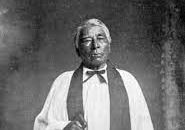
Fortunately the Episcopal Church later benefitted from this kind of cooperation. In 1859 John Johnson was ordained a deacon, and in 1867 a priest. Johnson was a member of the Odawa (Ottawa) tribe and the first Native American ordained to the Episcopal priesthood. We celebrate his feast day on June 12.


In the first grade, many years ago, I was the last kid in the entire class who learned how to spell his full name. I also had the longest name, chocked full of "s's and o's. Thus I have some special sympathy for Johnson, whose real name was not John Johnson at all. It was Enmegahbowh, which means "One Who Stands Before His People." Actually, it is a very appropriate name because he had a very successful ministry. Among other things, he worked extensively among the Ojibwe, especially near Peterborough, Ontario. To this day the Objibwe people are noted for their love of hymn singing. In Minnesota he help to found the very vital Columba Mission. Known as a man of peace, he brought peace between the Ojibwe and Dakota peoples.


About the only claim Johnson could not make was to be the first ordained Native American (First Nations) in all North America. That honor goes to Henry Budd, a member of the Cree band (tribe), who was ordained a deacon in the Anglican Church of Canada on December 22, 1850.


The Native American contribution to our faith has been richer than many of us may have realized. Actually Native Americans coming to the Episcopal faith would rather easily understand and support our love of liturgy (ritual)), the reality of both good and evil, and the importance of the earth's creation and our need to care for it. This Thanksgiving, like the Pilgrims of long ago, we can give thanks for their participation in our lives and faith.


ST PETER'S EPISCOPAL CHURCH BLOG
By Derek Larson • October 17, 2026
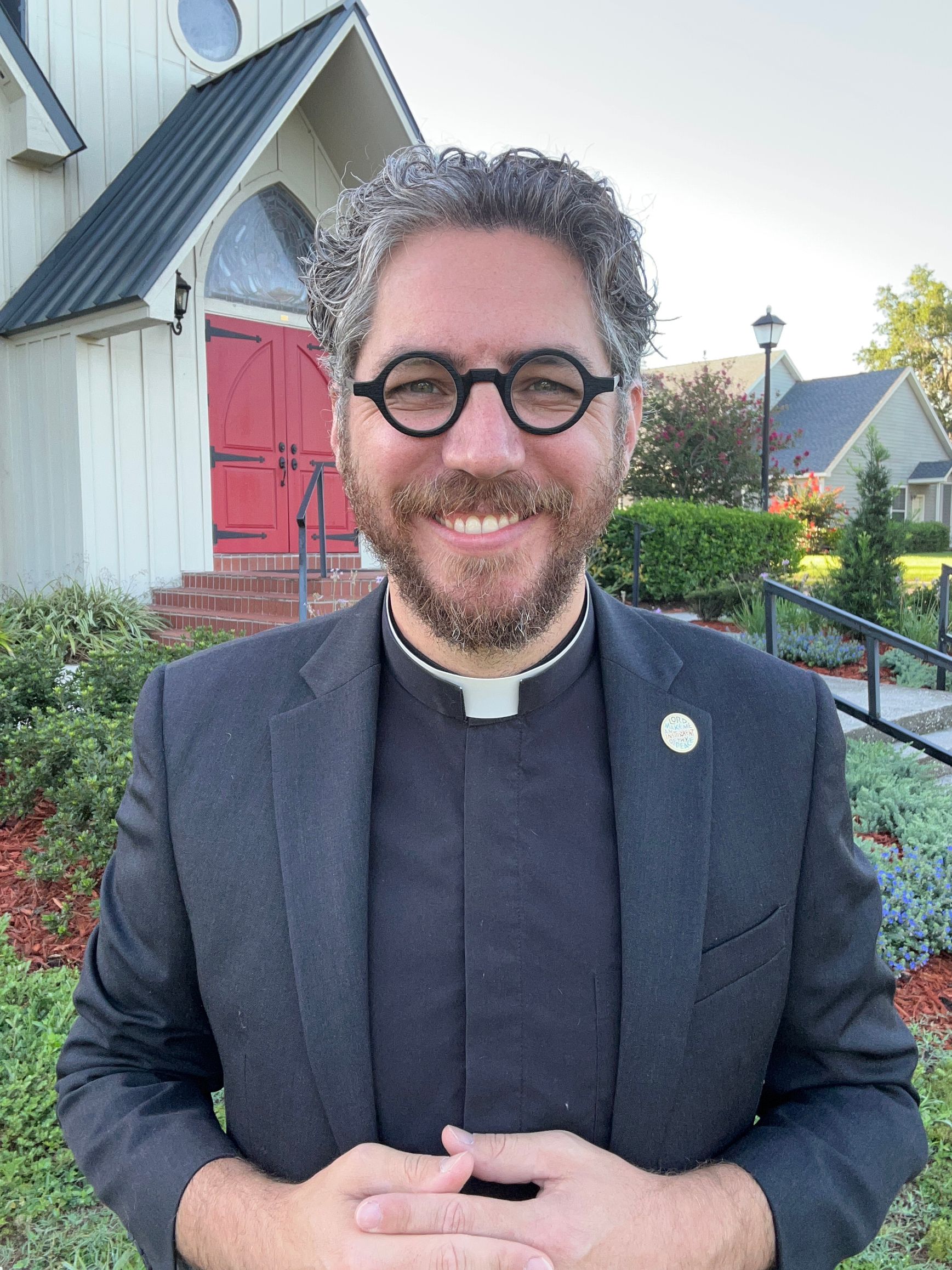
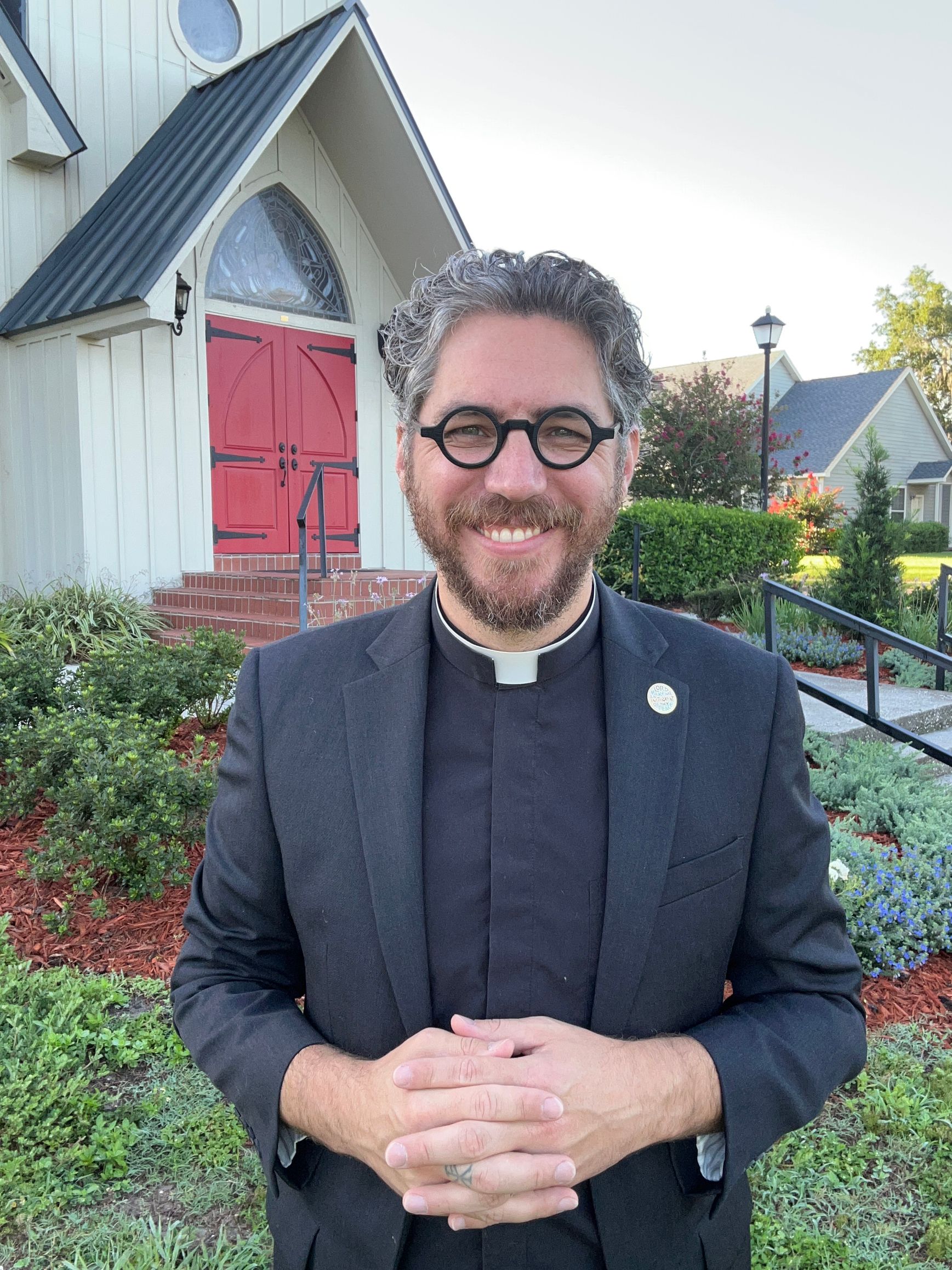
Quick Note: We hope you can join us tonight (Saturday, October 17th) at the rectory for our Backyard Open Mic Night gathering! 6:00pm! Pizza will be provided; you bring anything else you like. Now for what I'm thinking about this week: Here it is! A new look to our weekly newsletter. We hope this design is more accessible, engaging, community oriented, and clear in sharing all that's going on in the parish. Thank you so much to our Communications Team who worked hard on this. We highly encourage you to subscribe to our text messages so that you can receive it right on your phone as well! You might notice in the bottom section of the newsletter (called, "All the Rest"), we have three titles: The Table, The Living Room, and the Kitchen. A word about these images. The word parish literally means "to dwell beside". The idea is that a parish is a community of people who share life with one another. Let's take that idea a step further and imagine that St. Peter's is our spiritual family home. Where in the home do people gather? From the earliest centuries of the Church, Christian faith has been lived out in three primary ways. The Benedictines call these three areas Prayer, Study, and Work. A healthy and mature Christian faith includes all three areas. The three areas are also guiding principles in our parish life together. The Table is the place we gather for prayer. We gather each week at the altar for the Eucharist, to share a Divine meal with God and one another. We gather each day for Morning and Evening Prayer, speaking aloud the names of those on our parish prayer list and the needs of the world in the presence of Christ and the holy sacrament. The Table is a metaphor for prayer. The Living Room is the place we gather to grow in our Christian faith. It's where we share stories with one another, get to know each other, and spend time with one another. In Sunday School, Bible Study, and small groups, we gather to learn. At coffee hour, Engage Cafe, and festive dinners we gather to grow closer to one another. And thus the Living Room is a metaphor for fellowship and formation (study). The Kitchen is the place we gather to serve. Where aprons are put on, hands are washed, and sleeves are rolled up as we work together to take care of the community. At St. Peter's we serve both internally (through the work of Ministry Teams, the Vestry, the Choir, the Altar Guild, Lectors, etc.) and externally (through the work of Laundry Love, Friends in the Park, Meals on Wheels baskets, and so much more). The Kitchen is a metaphor for serving (work). To live out our lives as Christians means to live in Christian community in these three areas. In this new weekly newsletter, all of the relevant events, gatherings, and happenings in the parish will be listed in these areas to help us consider how we are engaging in the life of the whole parish. As you walk with others in faith at St. Peter's, I invite you to regularly participate in at least one gathering for prayer, one gathering for formation, and one way to serve. When we participate in the life of the parish in these three areas, not only will we see our parish strengthened, we'll see our relationships flourish and our personal faith lives grow. I hope you like the new design! I can't wait to see some photos that you submit to be featured each week. That's what's on my mind this week. I wonder what's on yours. I'd love to hear. Peace, Derek The Rev. Derek Larson
By Derek Larson • September 8, 2026
This week I am thinking about the treasure trove that is The Book of Common Prayer and other authorized liturgies in the Episcopal tradition. Most of us have no idea just how many wonderful prayers and liturgies there are for all occasions of life. For obvious reasons, the one that is foremost on my mind is on page 439 in The Book of Common Prayer, Thanksgiving for the Birth or Adoption of a Child. This liturgy has quite a history, going back hundreds of years. It has its roots in the Jewish tradition of purification rites for women 40 days after childbirth, but equally emphasizes thanksgiving for the birth of a child. In centuries where mortality rates of women during the birth of a child were very high, it became particularly important to thank God for safety in coming through it. It also was often the first time much of the community would be introduced to the child, who may or may not have been baptized yet, and thus it became a presentation of the child to God and to the community of God.
By John Santosuosso • May 1, 2026
The Rogation Days
By John Santosuosso • March 31, 2026
Do Not be Afraid of the Dark
By John Santosuosso • March 9, 2026
Everlasting Waters
By John Santosuosso • February 4, 2026
A Last Letter to Leo
By John Santosuosso • January 1, 2026
What the Camel Knows
By John Santosuosso • December 19, 2025
A (Sort of) Christmas Story
By Derek Larson • November 21, 2025
Our Shared Parish- Our Shared Goals
By Derek Larson • November 21, 2025
Our Shared Parish- Young and Old
More Posts